


Some sixty years ago, Frank Herbert, author of the enormously popular Dune series, wrote the following conversation in the first book of his famous trilogy: ‘Why do you test for humans?’ / ‘To set you free.’ / ‘Free?’ / ‘Once men turned their thinking over to machines in the hope that this would set them free. But that only permitted other men with machines to enslave them.’ / ‘Thou shalt not make a machine in the likeness of a man’s mind,’ Paul quoted. / ‘But what the [books] should’ve said is: ‘Thou shalt not make a machine to counterfeit a human mind.’
How prescient. Even if Herbert made an educated or even a lucky guess, his commandments are now well and truly being taken up and defied. Which is problematic? Perhaps not so much with the first, but more with the second. Making a machine in the likeness of a man’s mind is just the story of technology. Though admittedly, I could well do without predictive text.
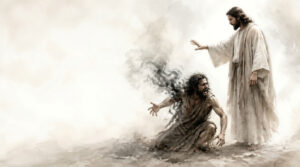
But the second: It’s the word ‘counterfeit’ that presents the problem, for it carries the notes of imposture and deceit, and of trying to pass off a machine as a human. And that constitutes a breach of a real commandment that is not in the realm of science fiction, but of bedrock truth. ‘You shall not bear false witness against your neighbour.’ Problematic? Like defying gravity, the pursuit of such deception will bring its inevitable robbery, and that will indeed be an unfortunate enslavement.


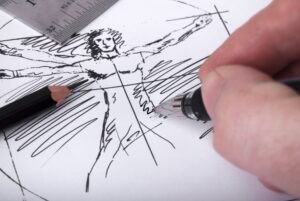
Vitruvian Man DM 4th September 2026 The Roman architect Vitruvius proposed that the human body could perfectly fit inside both a circle and a square,


The RSPCA DM 21st August 2026 The name William Wilbeforce is known by most people in the context of efforts in England to abolish slavery.