



If I could find words of sufficient worth, I would compose a song to the fennel plant. Yesterday I picked some of its delicate branches, crushed them in my hand, and enjoyed the fragrance of liquorice. And upon learning the nutritional qualities of the plant – being full of essential vitamins and minerals – I was ready to take up my pen, and in a burst of passion, write an ode in praise of herbal beauty.
But I have been beaten to the task by Longfellow, whose poem “The Goblet of Life” celebrates the bracing powers of the fennel plant. (He originally called it ‘Fennel’, when he wrote it in November 1841.) His poem unfortunately does not exalt the virtues of liquorice and chocolate, like mine would have done, but expounds the more non-confectionary themes of gallantry and virtue through patient suffering, drawn from the idea that a drop of fennel makes the goblet both bitter and true to life.
Longfellow is right about that. Life can be grim. But he was wrong to say nothing further, for after enduring life’s grim battle, he proposes that we can look forward to nothing more than the sleep of death.
I pledge you in this cup of grief,
Where floats the fennel’s bitter leaf!
The Battle of our Life is brief
The alarm, –the struggle, –the relief,
Then sleep we side by side.
O Longfellow, you sold the fennel plant short. It offers more than that. For once a Bitter Cup was drained so that we might do more than rest in peace, but live in glory, with garlands of joy and tears wiped away, and draught upon draught of water from that river that flows through the City of God.


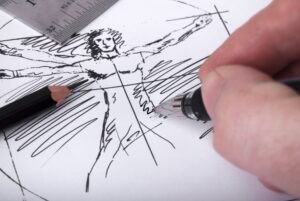
Vitruvian Man DM 4th September 2026 The Roman architect Vitruvius proposed that the human body could perfectly fit inside both a circle and a square,


The RSPCA DM 21st August 2026 The name William Wilbeforce is known by most people in the context of efforts in England to abolish slavery.