
Most movies have them. Even the best ones. Sometimes little anachronisms. Modern items caught in ancient places, like the daily newspaper at the café in the latest Gladiator movie. Sometimes little malpositions. Familiar things caught in unlikely places, like the sharks hunting in the Coliseum. Sometimes little word faults: malapropisms and archaisms and faux pas. (The creepy look-a-like statue in the courtyard – let the viewer understand – was technically not a blooper; just a blunder.)
That’s what’s amazing about the Book. There are no bloopers or blunders. No wristwatches on the Apostle Peter as he waved his sword around the Garden of Gethsemane. No plastic drink bottle sitting at the foot of Pilate when he took his seat for judgement. No Nikes on the man who on Good Friday carried Jesus’ cross. Impressive. After nearly two thousand years of the most exacting scrutiny, not one blooper is yet to be found.
That’s surely legitimate support for a statement like this: “We did not follow cleverly invented stories when we told you about the power and coming of our Lord Jesus Christ, but we were eyewitnesses of his majesty.” The Christian story is a not some fiction based loosely on historical facts. Nor some director’s vision of some religious epic. But a true story, where real people wore not costumes but real clothes, and spoke not rehearsed lines but real words in real time, and at the end of the day took home not a fistful of money, but a heartful of faith.


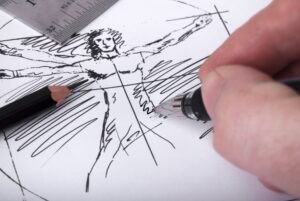
Vitruvian Man DM 4th September 2026 The Roman architect Vitruvius proposed that the human body could perfectly fit inside both a circle and a square,


The RSPCA DM 21st August 2026 The name William Wilbeforce is known by most people in the context of efforts in England to abolish slavery.